Call us: 095083 92120 / Email us: carevaledental@gmail.com
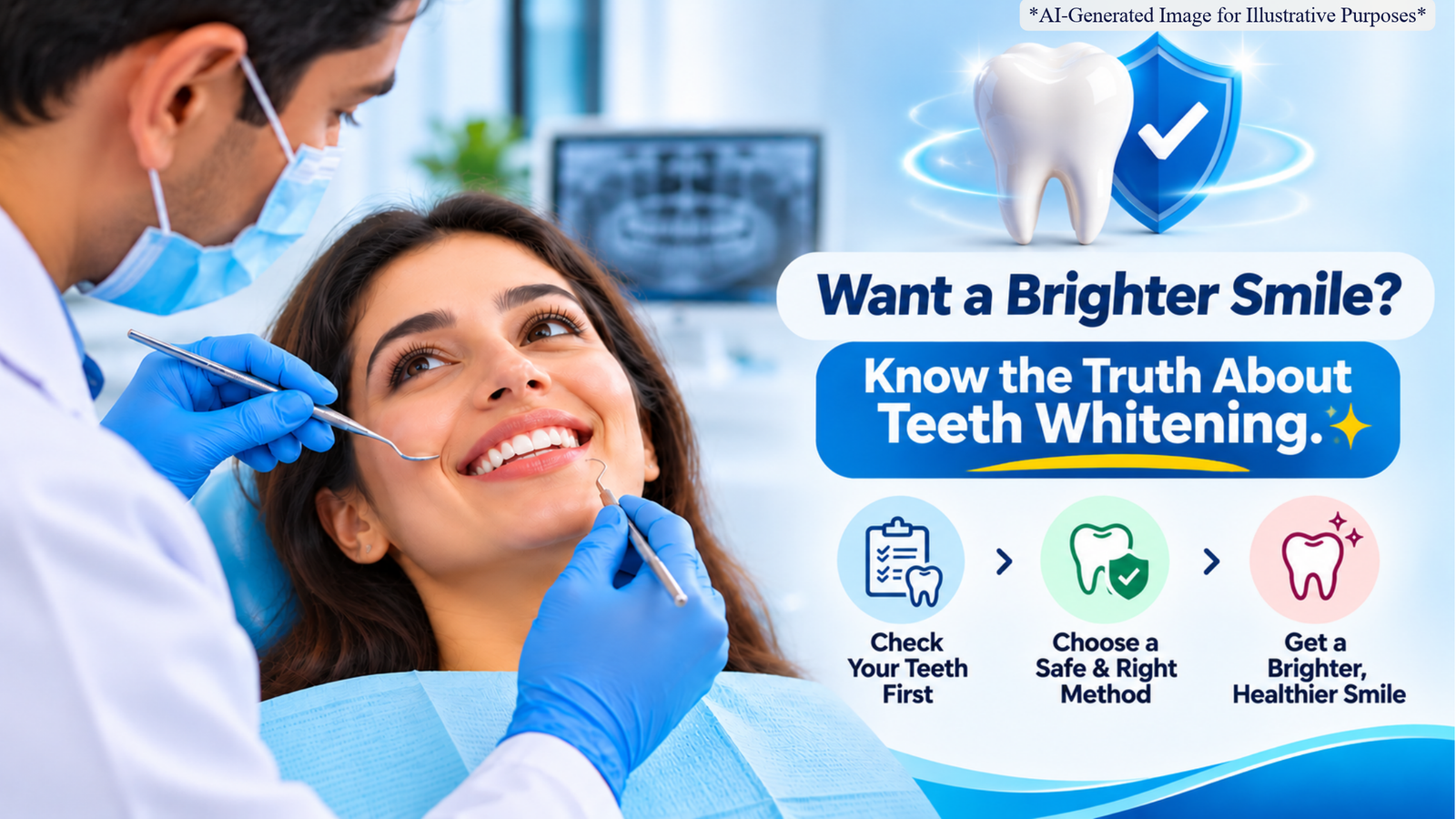
White Teeth vs Healthy Teeth: What’s The Difference?
I see it every day in my practice: a patient sits in my chair, flashes a brilliant, blindingly white smile, and asks for a routine checkup, confident their mouth is in pristine condition. Yet, when I take a closer look, I frequently find hidden cavities, receding gums, or chronic infections.
There is a massive misconception today—largely fueled by social media filters and aggressive cosmetic marketing—that a white smile is the ultimate indicator of good oral health.
Data shows that the global teeth whitening market is projected to reach over $9.3 billion this year. We are more obsessed with the color of our teeth than ever before. But as a dentist, I must share a vital truth: whiteness is an aesthetic choice, while health is a biological reality. A white smile can mask underlying disease, and a perfectly healthy smile is rarely perfectly white.
Fortune Business InsightsHow can someone tell if their teeth are actually healthy, and why is relying on whiteness as a measure of dental health misleading? Let us pull back the curtain on the science of your smile.
The Anatomy of Tooth Shade: Why “Natural” Isn’t Pure White
To understand why white does not equal healthy, we must look at the actual anatomy of a tooth. Your teeth are made of layers, and the color you see is the result of how light interacts with them:
- Enamel: This is the outermost, highly mineralized shell of the tooth. Enamel is semi-translucent and has a naturally off-white, slightly blue-tinted hue.
- Dentin: This is the dense, bony tissue directly beneath your enamel. Dentin is naturally yellow.
Because your enamel is translucent, the yellow dentin naturally peeks through. Therefore, a healthy, structurally sound tooth naturally possesses a slight yellowish or off-white tint. If your teeth are not paper-white, it does not mean you have poor hygiene; it often means you have thick, healthy enamel protecting your teeth.
What Most Websites Won’t Tell You: The Illusion of the “White Cavity”
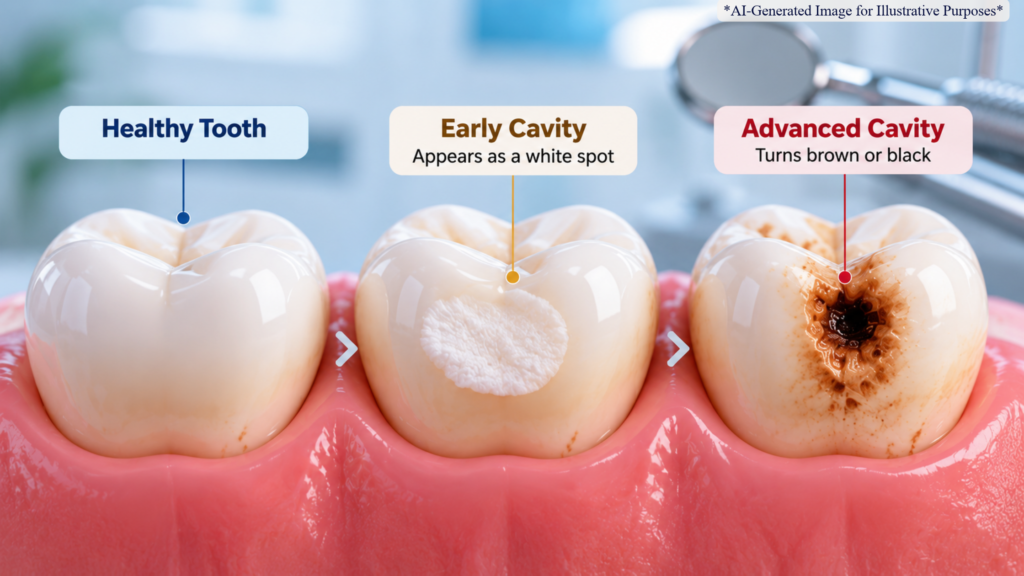
Many patients believe that if a tooth is decaying, it will turn black or brown. While advanced decay does discolor the tooth, early-stage decay looks entirely different.
When a cavity first forms, bacteria strip the minerals from your enamel. This demineralization actually creates a chalky, opaque white spot on the tooth surface. If you are only looking for a bright smile, you might mistake an active, early-stage cavity for a naturally white patch.
Cosmetic Dentistry Clinic
Furthermore, cosmetic whitening treatments only alter the color of the tooth surface. They cannot cure or hide structural issues. You can easily bleach a tooth that has an active infection inside the root canal, decay hidden between the teeth, or chronic bone loss underneath the gums. Whiteness is just a fresh coat of paint on a house with a crumbling foundation.
The Dangerous Side of Chasing the “Hyper-White” Aesthetic
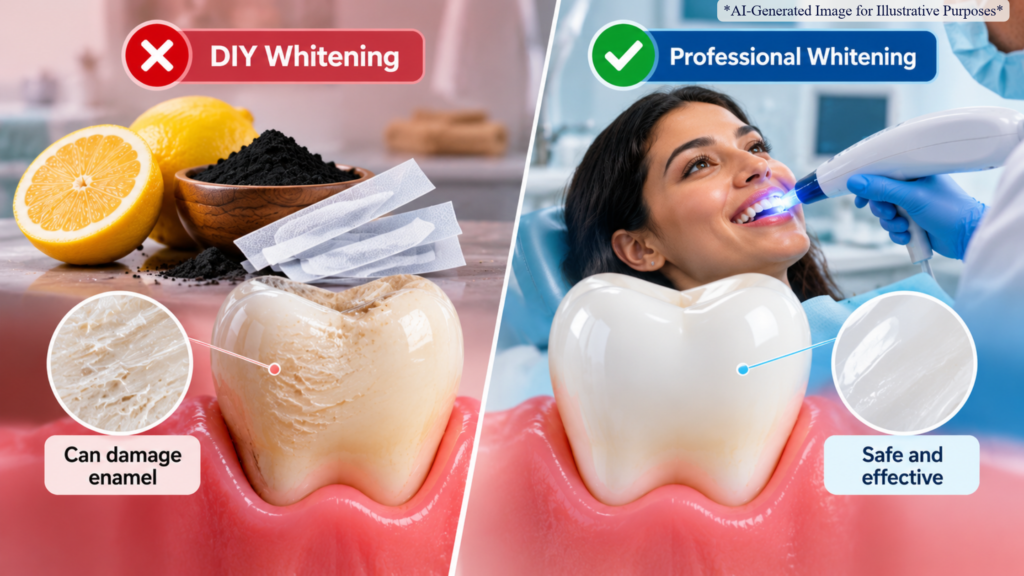
I always advise my patients to be cautious with aggressive, over-the-counter whitening trends. While professional, dentist-supervised whitening is safe, the misuse of DIY charcoal toothpastes, highly acidic lemon scrubs, or excessive bleaching strips can backfire drastically.
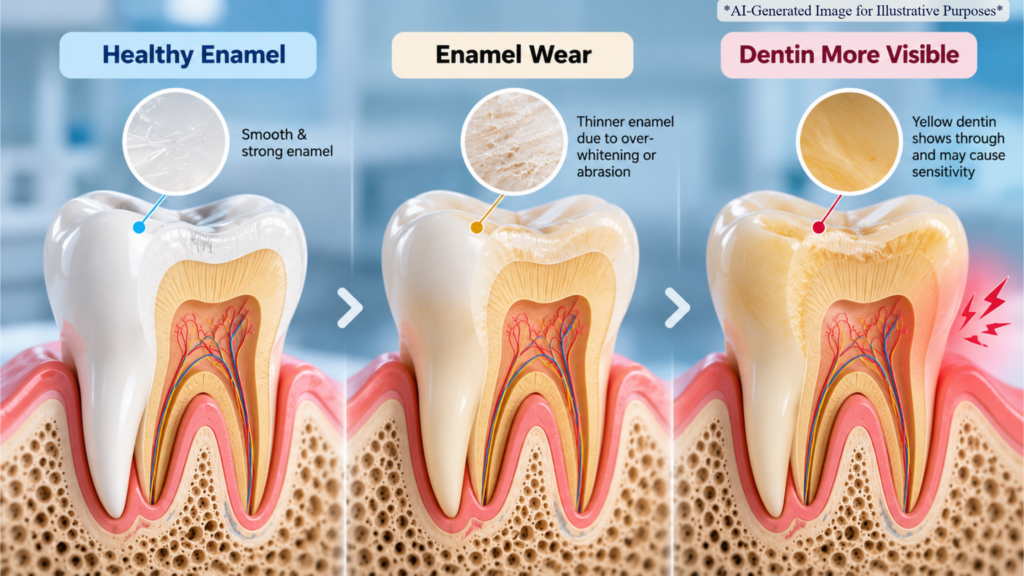
If you over-whiten or use highly abrasive materials, you strip away the protective layer of enamel. Once enamel is gone, it cannot grow back.
Ironically, stripping away your enamel exposes more of the underlying yellow dentin. This means over-whitening can actually make your teeth look more yellow over time, while leaving you with severe tooth sensitivity and a much higher risk of developing cavities.
The True Biological Benchmarks of a Healthy Mouth
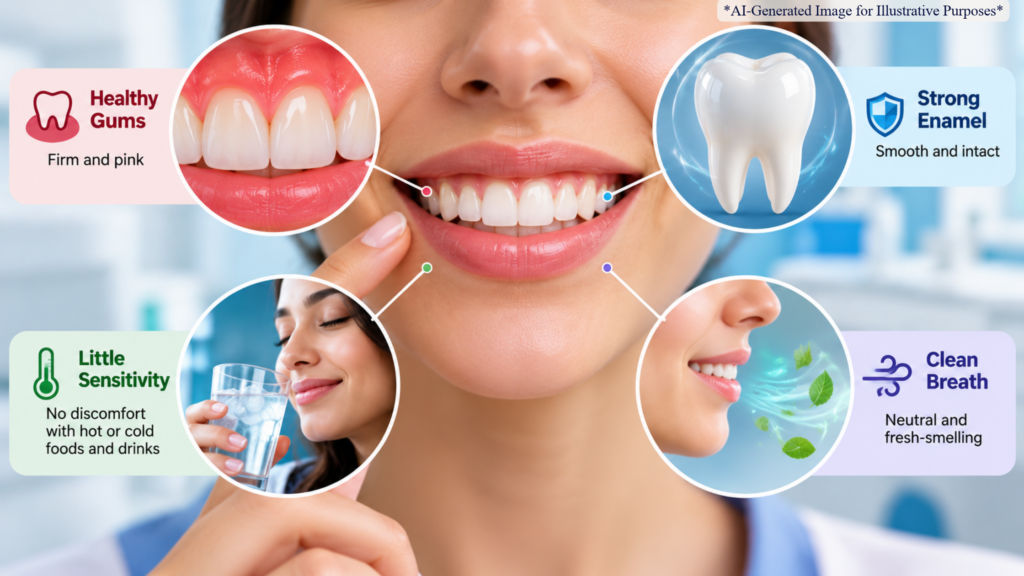
If whiteness is a misleading standard for a healthy smile, what should you look for instead? When I evaluate your oral health, I focus on specific, functional signs:
- Gums: Healthy gums are firm, pale pink, and tightly attached to the teeth. They should never bleed when you brush or floss.
- Enamel Integrity: Your enamel should be smooth, strong, and intact without chips, micro-cracks, or rough, chalky patches.
- Functional Sensitivity: You should experience minimal to no discomfort when consuming hot, cold, sweet, or acidic foods and drinks.
- Breath: Your breath should be clean and neutral, indicating a balanced oral microbiome with low bacteria levels rather than bad odors masked by strong mint flavors.
My Final Prescription for Your Smile
Do not let cosmetic marketing dictate how you view your health. Brush twice a day, floss daily, and remember that a clean, functional, and pain-free mouth is far more valuable than a chemically bleached smile hiding untreated disease.
If you want to discuss safe, enamel-friendly ways to brighten your smile, I invite you to book an appointment with me today. Let us make sure your smile is just as strong as it is bright.
Based on my digital marketing research, Indian consumers searching for dental advice frequently ask about traditional habits (like turmeric, betel nut, and charcoal), the heavy staining from Indian tea/coffee, and affordable home remedies versus safe clinical treatments.
Here is the professional FAQ section tailored specifically for your blog’s target audience:
Frequently Asked Questions
1. Does the turmeric or spices in Indian food permanently turn my teeth yellow?
No, it does not permanently stain your enamel, but the intense pigments in turmeric, tea, and coffee create stubborn surface stains over time. Regular professional cleanings easily remove these external layers, instantly revealing your natural, healthy tooth shade without needing chemical bleaching.
2. Can I safely use home remedies like lemon juice or charcoal powder to whiten my teeth?
I strongly advise against it. Highly acidic home remedies like lemon and abrasive mixtures like charcoal scrub away your protective enamel layer. Once this enamel thins, the naturally yellow dentin underneath becomes highly exposed, permanently darkening your teeth and causing severe sensitivity.
3. If my teeth are slightly yellowish, does it automatically mean my oral hygiene is bad?
Absolutely not. Healthy, structurally sound enamel is semi-translucent, allowing the underlying yellow layer of the tooth (called dentin) to naturally show through. If your gums are firm, pink, and do not bleed, a light yellowish tint is completely normal and healthy.
4. Is professional clinical teeth whitening safe, or will it damage my enamel?
When I perform dentist-supervised whitening, it is completely safe. We use precisely measured, balanced formulas that break down stains without compromising your tooth structure. However, I always treat active cavities and gum issues first to ensure the procedure does not cause pain or nerve damage.
5. Why do my teeth hurt or feel sensitive after I use over-the-counter whitening strips?
Whitening agents temporarily dehydrate your teeth and open up microscopic nerve pathways in your enamel. If you use generic strips without professional guidance, you risk severe nerve irritation and chemical gum burns. I recommend a checkup to evaluate your enamel thickness first.